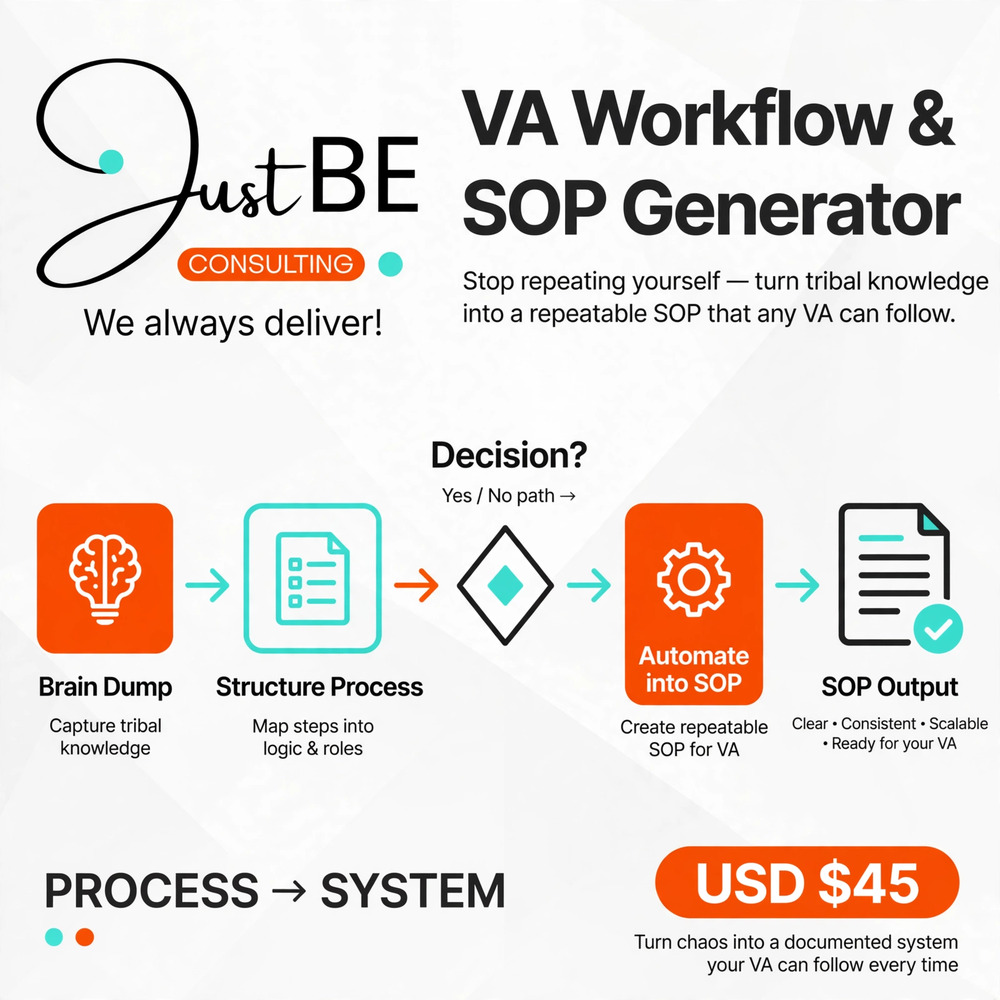
The VA Workflow & SOP Generator can help you turn recurring business activities into documented, repeatable processes.
Here are five practical examples:
- Social Media Management Workflow
Example workflow: Monthly social media content planning and publishing.
Document the complete process, from researching content ideas and preparing the monthly content calendar to creating graphics, writing captions, obtaining approval, scheduling posts and reviewing performance. Include responsibilities, approval points and the tools used at each stage.
- Website & Online Store Management SOP
Example workflow: Processing and publishing new products in a WooCommerce store.
Document the standard procedure for receiving product information, preparing descriptions and images, creating product listings, setting prices, assigning categories, completing SEO fields, checking the product page and publishing approved products.
- Email Marketing Workflow
Example workflow: Creating, approving and sending a monthly newsletter.
Record each stage of the process, including gathering content, preparing the email, selecting the appropriate mailing list, checking links and formatting, sending test emails, obtaining approval, scheduling the campaign and reviewing results.
- Customer Enquiry & Order Processing SOP
Example workflow: Managing customer enquiries from receipt through to resolution.
Document how enquiries are received, categorised, assigned and tracked, including response time expectations, approved response templates, escalation procedures, order-related checks and how completed enquiries are recorded.
- Lead Generation & Follow-Up Workflow
Example workflow: Managing new business leads from initial research to follow-up.
Create a repeatable process for identifying potential clients, checking whether they meet the target customer criteria, capturing their details in the CRM, categorising prospects, recording communication, scheduling follow-ups and updating lead statuses.
Turn recurring activities into repeatable processes
These examples are starting points, not fixed instructions. Each workflow should be documented with its purpose, scope, responsibilities, required resources, tools, process steps, decision points, quality checks, expected outcomes and review requirements.
A well-documented SOP gives your business a shared reference point, helping team members follow consistent procedures, making training easier and creating opportunities to identify and improve inefficient processes.

Reviews
There are no reviews yet.